If you own a Jeep Cherokee XJ with the legendary 4.0-liter inline-six, you have likely experienced the dreaded temperature gauge creeping past 210 degrees on a hot summer day. This is not a coincidence—it is a design flaw. The XJ was originally engineered for a small V6 engine, and when Jeep shoehorned the massive 4.0L straight-six into the already cramped engine bay, the cooling system became marginal at best . With less than four inches of clearance between the radiator fan and the engine, combined with an undersized radiator and limited airflow, overheating is practically guaranteed under heavy load, off-road crawling, or even sitting in traffic with the air conditioning on . The good news? A well-planned cooling system upgrade can transform your XJ from a temperamental hothead into a reliable trail companion.
The Three Pillars of Cooling Upgrades
The most effective approach targets three areas: the radiator, the water pump, and airflow management. Start by replacing the factory radiator—which features plastic tanks prone to cracking—with a high-quality all-aluminum unit. Options from Mishimoto and Cold Case have proven track records, with owners reporting dramatically lower temperatures even in extreme conditions . One XJ owner in Miami saw his overheating issues vanish completely after installing a Cold Case two-row aluminum radiator . Pair this with a high-performance water pump like the Flowkooler, which uses a billet impeller designed to move more coolant at low engine speeds—precisely when your XJ needs it most during off-road crawling .
Third, address airflow. The factory mechanical fan clutch wears out over time, reducing its ability to pull air through the radiator. Installing a heavy-duty ZJ fan clutch (from a Grand Cherokee) increases fan speed to 70-90% of pulley speed compared to the stock unit’s 60-70%, creating that distinctive “airplane taking off” sound that tells you cooling is happening . Many owners also upgrade the auxiliary electric fan to a later-model 10-blade curved design from 1997-2001 XJs, which moves significantly more air than early 6-blade versions . For serious off-road use, the Mishimoto triple electric fan system replaces both factory fans with three 950 CFM units, boosting idle airflow by nearly 42% .
Don’t Forget the Basics
Before throwing money at premium components, ensure the foundation is solid. Flush the system thoroughly to remove rust and debris from the iron block—old coolant turns corrosive and accelerates component failure . Install a new 195-degree thermostat (never use a cooler one; the engine needs to reach proper operating temperature) and a fresh 16-18 psi radiator cap, which is often overlooked but critical for maintaining system pressure and raising the boiling point . Check that the electric fan actually comes on when the coolant temperature sensor triggers it at around 210 degrees—a failed sensor or relay is a common culprit .
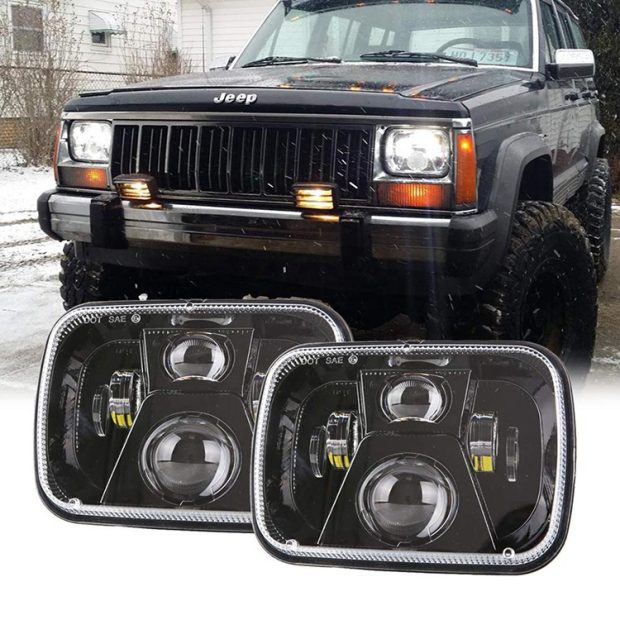
One of the most overlooked, yet critically important, aspects of upgrading your XJ’s cooling system is the relationship between engine heat and your headlights. The Jeep Cherokee XJ headlight switch and wiring harness are notoriously undersized, and excessive heat under the hood—exactly what you are fighting with cooling upgrades—can accelerate the degradation of these components . Owners have reported headlight switches overheating to the point of melting the wiring harness, with one forum member discovering his connector had nearly caught fire . The root cause is high resistance in the circuit, which generates heat, and an already-hot engine bay only makes matters worse. When you are upgrading your cooling system, take the opportunity to install a headlight relay harness. This simple modification draws power directly from the battery rather than routing the full current through the dashboard switch, dramatically reducing the electrical load on the switch and wiring. It also delivers full voltage to your headlights, making them significantly brighter—a welcome improvement when you are navigating dark trails after a long day of wheeling. While you are under the hood, clean all ground connections and consider upgrading the alternator, as the stock 90-amp unit may struggle to run multiple electric fans, the AC blower, and high-output headlights simultaneously at idle .
Putting It All Together
A comprehensive cooling system upgrade is not cheap, but it is far less expensive than replacing a cracked cylinder head—a common consequence of repeated overheating, particularly on 2000-2001 XJs with the notorious 0331 casting . Start with a thorough flush and basic components (thermostat, cap, fan clutch), then evaluate whether you need the full aluminum radiator and electric fan conversion. For most daily drivers, the mechanical fan upgrade and a healthy stock-style radiator will suffice. For dedicated off-roaders who crawl in low-range for hours, the triple electric fan setup is worth every dollar . Either way, addressing your XJ’s cooling weakness is the single most important reliability upgrade you can perform. Your engine—and your headlight switch—will thank you.